Long-Term Personal Financial Goals: Achieving Milestones by 2030

Anúncios
Achieving long-term personal financial goals by 2030 requires strategic planning, consistent saving, and smart investing, outlining actionable steps for Americans to define their financial future, overcome common hurdles, and build lasting wealth.
Anúncios
Embarking on a journey to secure your financial future is a significant undertaking, and setting long-term personal financial goals is the compass that guides this path. By 2030, many Americans aspire to reach significant milestones, from buying a home to ensuring a comfortable retirement. This article will delve into practical strategies and insights to help you not only define these goals but also meticulously plan and execute the steps necessary to achieve them, transforming aspirations into tangible realities.
Defining Your Financial Vision for 2030
Before you can achieve your long-term financial goals, you must first clearly define what those goals are. The year 2030 is rapidly approaching, making it an opportune time to establish specific, measurable, achievable, relevant, and time-bound (SMART) objectives. This initial phase involves introspection and realistic assessment of your current financial standing and future desires.
Anúncios
Consider what truly matters to you. Is it early retirement, funding your children’s education, purchasing a dream home, or perhaps starting your own business? Each of these aspirations requires a distinct financial strategy. The clearer your vision, the more effectively you can allocate resources and make informed decisions.
Identifying Key Milestones
- Retirement Savings: Determine the desired lifestyle in retirement and estimate the capital needed.
- Homeownership: Calculate down payment requirements and potential mortgage costs.
- Education Funding: Research tuition costs for future education, whether for yourself or dependents.
- Debt Freedom: Set a target date for eliminating high-interest debts like credit card balances or student loans.
Defining your financial vision for 2030 is more than just dreaming; it’s about translating those dreams into actionable targets. This foundational step provides the motivation and direction needed for the subsequent stages of financial planning. Without a clear destination, any path will do, but with a well-defined vision, you can chart the most efficient course.
Assessing Your Current Financial Landscape
Once your long-term personal financial goals are clearly articulated, the next crucial step is to gain a comprehensive understanding of your current financial situation. This involves a thorough analysis of your income, expenses, assets, and liabilities. An honest assessment will reveal your starting point and highlight areas that require immediate attention or adjustment.
Many people shy away from this step, fearing what they might discover. However, knowledge is power in financial planning. By understanding exactly where you stand, you can create a realistic and effective plan to bridge the gap between your current state and your 2030 aspirations.
Creating a Detailed Budget
A budget is the cornerstone of effective financial management. It allows you to track where your money is going and identify opportunities for savings. Categorize your expenses into fixed (rent, mortgage, loan payments) and variable (groceries, entertainment, dining out) to gain clarity.
Understanding your cash flow is paramount. If more money is going out than coming in, you’ll need to make adjustments. This might involve cutting discretionary spending, finding ways to increase income, or a combination of both. Regular budget reviews ensure you stay on track and adapt to changing circumstances.
Evaluating Assets and Liabilities
- Assets: List all valuable possessions, including savings accounts, investment portfolios, real estate, and other liquid or illiquid holdings.
- Liabilities: Document all debts, such as credit card balances, student loans, car loans, and mortgages.
- Net Worth: Calculate your net worth by subtracting your total liabilities from your total assets. This figure provides a snapshot of your financial health.
By diligently assessing your current financial landscape, you lay the groundwork for informed decision-making. This rigorous evaluation provides the data necessary to construct a robust plan that can realistically lead to the achievement of your long-term personal financial goals by 2030.
Crafting a Strategic Financial Plan
With a clear vision and a thorough understanding of your current finances, the next logical step is to craft a strategic financial plan. This plan acts as your roadmap, detailing the specific actions you need to take to achieve your long-term personal financial goals by 2030. It should be dynamic, allowing for adjustments as life circumstances evolve.
A well-structured financial plan isn’t merely a list of aspirations; it’s a living document that outlines concrete steps, timelines, and contingencies. It integrates various financial tools and strategies to optimize your journey toward financial independence and security.
Setting Realistic Savings Targets
Based on your goals and current financial assessment, establish specific monthly or annual savings targets. Break down your larger goals into smaller, more manageable increments. For instance, if you aim to save $100,000 for a down payment by 2030 (seven years), you’d need to save approximately $1,190 per month.
Automating your savings is one of the most effective strategies. Set up automatic transfers from your checking account to your savings or investment accounts immediately after your paycheck arrives. This ‘pay yourself first’ approach ensures consistency and reduces the temptation to spend the money elsewhere.
Investment Strategies for Growth
- Diversification: Spread your investments across various asset classes (stocks, bonds, real estate) to mitigate risk.
- Risk Tolerance: Understand your personal comfort level with investment risk and align your portfolio accordingly. Younger investors often have a longer risk tolerance due to a longer time horizon.
- Professional Guidance: Consider consulting a financial advisor to help create a personalized investment strategy that aligns with your 2030 goals.
Crafting a strategic financial plan is an ongoing process that requires discipline and regular review. By setting realistic savings targets and implementing sound investment strategies, you significantly enhance your chances of achieving your long-term personal financial goals within the specified timeframe.
Leveraging Investment Vehicles for Growth
To effectively achieve your long-term personal financial goals by 2030, simply saving money isn’t enough; you need to make your money work for you. This involves strategically utilizing various investment vehicles designed for growth. Understanding the options available and how they align with your risk tolerance and time horizon is critical for maximizing returns.
The power of compounding is a significant advantage for long-term investors. Reinvesting earnings allows your money to grow exponentially over time. Choosing the right investment vehicles can accelerate your progress towards your financial milestones.
Retirement Accounts: 401(k)s and IRAs
For many Americans, employer-sponsored 401(k)s and individual retirement accounts (IRAs) are the primary vehicles for retirement savings. These accounts offer significant tax advantages, such as tax-deferred growth or tax-free withdrawals in retirement, depending on whether they are traditional or Roth accounts.
Maximizing contributions to these accounts, especially if your employer offers a matching contribution, is often considered a foundational step in long-term financial planning. This ‘free money’ can substantially boost your retirement nest egg over the years leading up to 2030 and beyond.
Diversifying with Brokerage Accounts and Real Estate
- Taxable Brokerage Accounts: For savings beyond retirement accounts, a taxable brokerage account offers flexibility and access to a wide range of investment options, including individual stocks, ETFs, and mutual funds.
- Real Estate: Investing in real estate, either directly through rental properties or indirectly via Real Estate Investment Trusts (REITs), can provide diversification, potential appreciation, and rental income.
- Alternative Investments: Explore options like peer-to-peer lending or even small business investments, but only after thorough research and understanding the associated risks.
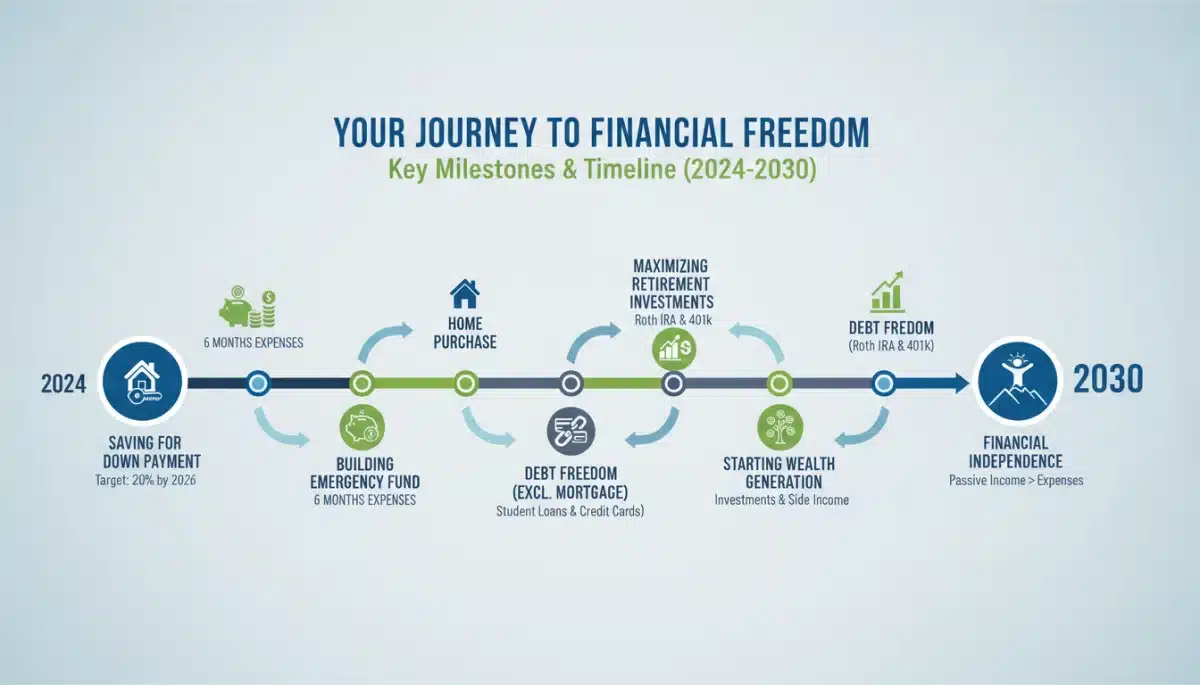
By leveraging a diverse mix of investment vehicles, you can optimize your portfolio for growth and align it with your specific long-term personal financial goals. Regular review and rebalancing of your investments are essential to ensure they continue to meet your objectives as market conditions and personal circumstances change.
Overcoming Obstacles and Staying Accountable
The path to achieving long-term personal financial goals is rarely linear. You will inevitably encounter obstacles, whether they are unexpected expenses, market downturns, or personal challenges. The key to success lies in anticipating these hurdles, developing strategies to overcome them, and maintaining unwavering accountability to your financial plan.
Resilience and adaptability are crucial traits for any long-term financial planner. Instead of letting setbacks derail your progress, view them as opportunities to refine your strategy and strengthen your financial resolve. A robust plan includes contingencies for unforeseen events.
Building an Emergency Fund
One of the most effective ways to mitigate the impact of unexpected expenses is to establish a robust emergency fund. This fund should ideally cover three to six months of essential living expenses, stored in an easily accessible, liquid account. An emergency fund prevents you from dipping into your long-term investments or accumulating high-interest debt when crises arise.
Having this financial cushion provides peace of mind and ensures that minor disruptions don’t derail your carefully constructed 2030 financial plan. It acts as a protective barrier around your main investment strategies.
Regular Review and Adjustment
- Quarterly Check-ins: Schedule regular reviews of your budget, savings progress, and investment performance.
- Goal Reassessment: Life changes, and so might your goals. Be prepared to adjust your 2030 targets if your priorities or circumstances shift.
- Professional Advice: Consider working with a certified financial planner who can provide objective guidance, help you navigate complex financial decisions, and keep you accountable.
Staying accountable to your financial goals requires discipline and a proactive approach. By building an emergency fund, regularly reviewing your progress, and seeking expert advice when needed, you can effectively overcome obstacles and remain on track to achieve your long-term personal financial goals by 2030.
Protecting Your Financial Future
As you work diligently towards achieving your long-term personal financial goals by 2030, it is equally important to protect the assets you are accumulating and the financial well-being of your dependents. Risk management is an integral part of comprehensive financial planning, ensuring that unforeseen events do not unravel years of hard work and strategic saving.
Protection comes in various forms, from insurance policies to legal safeguards. A holistic approach ensures that your financial journey is not only focused on growth but also on resilience against potential threats. This foresight provides a strong foundation for lasting financial security.
The Role of Insurance
Insurance acts as a safety net against significant financial losses. Understanding and securing the right types of insurance policies are vital for protecting your assets and income. This includes:
- Health Insurance: Essential for covering medical expenses, preventing catastrophic healthcare costs from depleting savings.
- Life Insurance: Provides financial support to your dependents in the event of your untimely death, ensuring their financial stability.
- Disability Insurance: Replaces a portion of your income if you become unable to work due to illness or injury.
- Home and Auto Insurance: Protects your valuable physical assets from damage, theft, or liability claims.
Adequate insurance coverage is not an expense but an investment in your peace of mind and financial security. It shields your progress towards your 2030 goals from unexpected financial burdens.
Estate Planning and Legal Safeguards
While often overlooked, establishing an estate plan is a crucial step in protecting your financial future and ensuring your wishes are carried out. This involves:
- Wills and Trusts: Legally dictate how your assets will be distributed upon your death, avoiding probate and potential family disputes.
- Powers of Attorney: Designate individuals to make financial and healthcare decisions on your behalf if you become incapacitated.
- Beneficiary Designations: Ensure your retirement accounts and life insurance policies have up-to-date beneficiaries, overriding your will in many cases.
By proactively addressing these protective measures, you safeguard your wealth, provide for your loved ones, and ensure that your long-term personal financial goals, as well as your legacy, are secured against life’s uncertainties.
Celebrating Milestones and Adapting for the Future
As you progress towards your long-term personal financial goals by 2030, it’s essential to acknowledge and celebrate the milestones you achieve along the way. Recognizing these smaller victories can provide motivation, reinforce positive financial habits, and keep you engaged in your long-term plan. Financial planning is a journey, not just a destination.
Beyond celebration, the approach of 2030 also necessitates a critical look at what comes next. Financial planning is an ongoing process that extends far beyond any single target date. Adapting your strategies for the future ensures continued growth and security.
The Power of Small Wins
Whether it’s paying off a credit card, reaching a specific savings threshold, or increasing your investment contributions, each step forward is worthy of recognition. These small wins build momentum and confidence, making the larger, more distant goals feel more attainable. Consider creating a visual tracker for your progress to reinforce these positive feelings.
Rewarding yourself (modestly and without derailing your budget) for achieving these milestones can also be a powerful motivator. It transforms the often-abstract concept of financial planning into a more tangible and satisfying experience.
Future-Proofing Your Finances Beyond 2030
- Re-evaluating Goals: As 2030 approaches, assess whether your original goals are still relevant or if new aspirations have emerged.
- Inflation and Market Changes: Regularly review your investment portfolio to ensure it continues to outpace inflation and adapt to evolving market conditions.
- Legacy Planning: Begin to consider longer-term goals such as wealth transfer, philanthropic endeavors, and ensuring financial security for future generations.
By celebrating your milestones and actively adapting your financial strategies, you ensure that your journey towards long-term personal financial goals remains dynamic, rewarding, and perpetually aligned with your evolving life. The principles established by 2030 will serve as a robust foundation for continued financial success.
| Key Aspect | Brief Description |
|---|---|
| Goal Definition | Clearly articulate SMART financial goals for 2030, such as retirement or homeownership. |
| Financial Assessment | Analyze income, expenses, assets, and liabilities to understand your current financial standing. |
| Strategic Planning | Develop a detailed roadmap with savings targets and investment strategies. |
| Risk Management | Protect assets and income through insurance and estate planning. |
Frequently Asked Questions About Long-Term Financial Goals
The first steps involve defining clear, specific, and measurable goals, often using the SMART criteria. This includes identifying what you want to achieve (e.g., retirement, homeownership, education funding) and when you want to achieve it. An honest assessment of your current financial situation, including income, expenses, assets, and liabilities, is also crucial before planning.
Prioritize your goals based on importance and urgency. Allocate a percentage of your income to each goal, automating transfers to separate savings or investment accounts. Consider using different investment vehicles for different goals; for example, a 401(k) for retirement and a taxable brokerage account for a down payment. Regularly review and adjust allocations as needed.
Investments are critical for growth, allowing your money to outpace inflation and compound over time. Simply saving cash may not be enough for long-term goals. Utilizing vehicles like 401(k)s, IRAs, and brokerage accounts with diversified portfolios helps maximize returns. Your investment strategy should align with your risk tolerance and the time horizon to 2030.
An emergency fund is extremely important. It acts as a financial safety net, covering unexpected expenses like job loss or medical emergencies without forcing you to dip into your long-term investments or incur high-interest debt. Aim for three to six months of living expenses in an easily accessible, liquid account to protect your financial progress.
Consulting a financial advisor can be highly beneficial, especially for complex situations or if you’re unsure about the best strategies. They can help you define realistic goals, create a personalized investment plan, navigate tax implications, and keep you accountable. A professional can provide objective insights and expertise tailored to your specific circumstances and aspirations.
Conclusion
Achieving long-term personal financial goals by 2030 is an ambitious yet entirely attainable endeavor. It demands a clear vision, a thorough understanding of your current financial standing, a meticulously crafted strategic plan, and a commitment to continuous adaptation and protection. By systematically defining your objectives, assessing your resources, leveraging appropriate investment vehicles, and safeguarding your progress against unforeseen challenges, you can confidently navigate the path to financial success. Remember, the journey is as important as the destination; celebrating milestones and remaining flexible will ensure your financial future is not only secure but also fulfilling.