Estate Planning Essentials 2026: Protect Your Family’s Future

Anúncios
Effective estate planning in 2026 is crucial for safeguarding assets and securing your family’s future, encompassing legal documents, strategic asset allocation, and proactive financial foresight.
Anúncios
Navigating the complexities of financial futures can feel daunting, but understanding the
estate planning essentials 2026 is paramount for securing your legacy and ensuring your loved ones are protected.
This guide will illuminate the critical steps and considerations for safeguarding your assets and providing peace of mind for your family’s future.
understanding the basics of estate planning in 2026
Estate planning is more than just drafting a will; it’s a comprehensive process of arranging for the management and disposal of your estate during your life and after death. In 2026, this involves navigating evolving laws, technologies, and financial landscapes to ensure your wishes are honored and your beneficiaries are protected. A well-constructed estate plan minimizes tax burdens, avoids probate, and provides clear directives for your medical and financial care should you become incapacitated. It’s a proactive approach to your financial well-being and your family’s security.
Anúncios
The legal framework surrounding estate planning can shift, making it vital to stay informed about current regulations. For instance, changes in federal estate tax exemptions or state-specific inheritance laws could significantly impact your plan. Engaging with professionals who specialize in current estate law is a wise investment. They can help you understand the nuances and tailor a plan that accounts for these variables, ensuring its effectiveness for years to come.
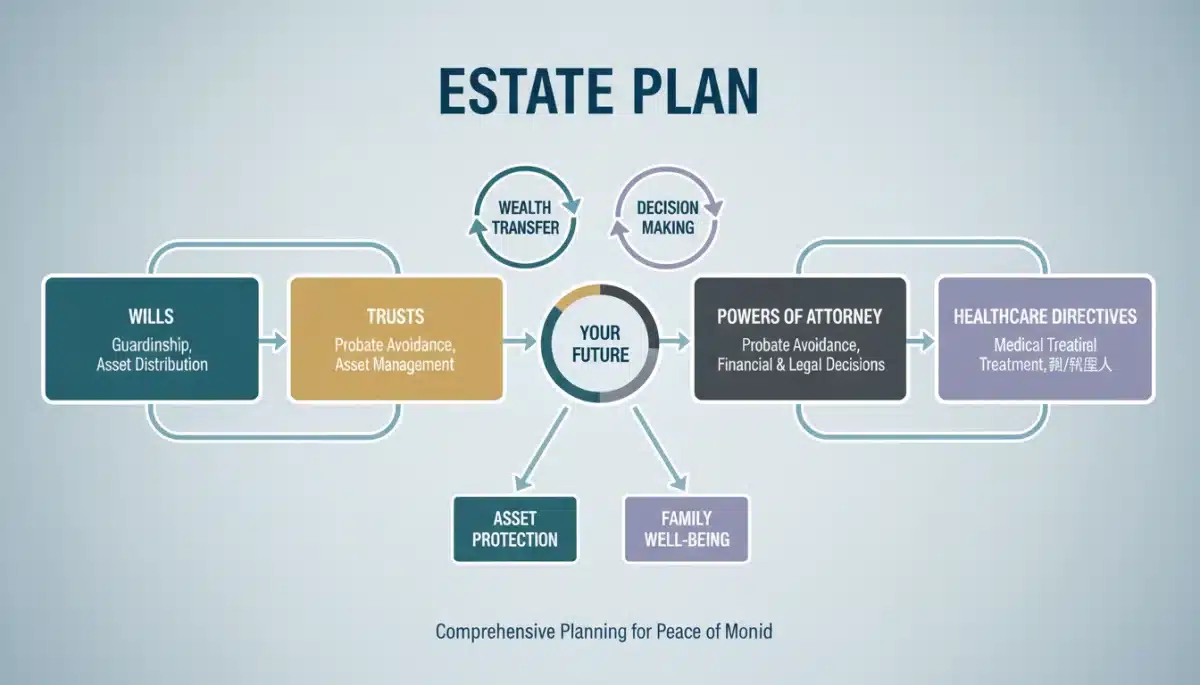
the core documents you will need
- Last Will and Testament: This document specifies how your assets will be distributed and names guardians for minor children.
- Living Trust: A trust can help avoid probate, provide privacy, and offer more control over asset distribution.
- Power of Attorney: Designates someone to make financial decisions on your behalf if you cannot.
- Healthcare Directives: Includes a living will and healthcare power of attorney, outlining your medical wishes.
These foundational documents form the backbone of any robust estate plan. While they may seem straightforward, their proper execution and regular review are critical. Life events such as marriage, divorce, births, or significant financial changes necessitate updates to these documents to reflect your current situation and wishes. Failing to update them can lead to unintended consequences and complicate matters for your family during an already difficult time.
In essence, understanding the basics of estate planning in 2026 means recognizing it as an ongoing, dynamic process rather than a one-time event. It’s about building a resilient framework that can adapt to both personal life changes and external legal shifts, providing enduring protection for your assets and peace of mind for your loved ones.
navigating wills and trusts for optimal asset protection
Wills and trusts are cornerstones of estate planning, each offering distinct advantages for asset protection and distribution. Understanding their differences and how they can work in concert is crucial for crafting an effective plan. A will primarily dictates asset distribution after your death and names guardians for minors, while a trust offers greater flexibility, privacy, and can bypass the often lengthy and public probate process.
For many, a combination of both a will and a trust provides the most comprehensive protection. A ‘pour-over’ will, for example, can ensure that any assets not explicitly placed into a trust during your lifetime are transferred into it upon your death. This integrated approach ensures that all your assets are managed according to your wishes, minimizing potential disputes and maximizing efficiency for your beneficiaries.
choosing the right type of trust
- Revocable Living Trust: Allows you to maintain control over assets during your lifetime and can be altered or revoked.
- Irrevocable Trust: Offers stronger asset protection from creditors and can reduce estate taxes, but assets cannot be easily changed or withdrawn.
- Special Needs Trust: Provides for beneficiaries with disabilities without jeopardizing their eligibility for government benefits.
The choice between revocable and irrevocable trusts depends heavily on your specific goals regarding control, asset protection, and tax implications. A revocable living trust is popular for its flexibility and ability to avoid probate, while an irrevocable trust is often chosen for its robust asset protection capabilities and potential estate tax advantages. Consulting with an estate planning attorney is essential to determine which trust structure best aligns with your financial situation and long-term objectives.
Beyond the immediate benefits, properly structured wills and trusts can also provide a framework for philanthropic endeavors or specific instructions for business succession. They are not merely legal documents but powerful tools for shaping your legacy. By carefully considering your options and working with experienced professionals, you can ensure your assets are protected and distributed precisely as you intend, securing your family’s future for generations.
the importance of healthcare directives and power of attorney
Beyond asset distribution, a comprehensive estate plan must address personal well-being and decision-making during incapacity. Healthcare directives and powers of attorney are vital components that ensure your medical wishes are respected and your financial affairs are managed if you cannot do so yourself. These documents remove uncertainty and potential conflict for your family during challenging times.
A healthcare directive, often known as a living will, explicitly states your preferences for medical treatment, especially regarding life-sustaining measures. This empowers you to make critical decisions about your care in advance, alleviating the burden from your loved ones. It ensures your autonomy is preserved, even when you cannot communicate directly. It is a compassionate act that provides clarity and peace of mind for everyone involved.
designating your agents and their powers
- Durable Power of Attorney: Grants an agent the authority to manage your financial affairs.
- Healthcare Power of Attorney (or Proxy): Designates someone to make medical decisions on your behalf.
- HIPAA Release: Allows designated individuals access to your medical information.
Carefully selecting your agents for both financial and healthcare powers of attorney is paramount. These individuals should be trustworthy, capable, and willing to act in your best interests. Clearly defining the scope of their authority and communicating your wishes to them in advance can prevent misunderstandings and ensure smooth execution. Without these designations, courts may appoint guardians, which can be a lengthy and expensive process that may not align with your preferences.
The legal landscape surrounding these directives can vary by state, making it essential to ensure your documents comply with local laws. Regular reviews, especially after significant life changes or health developments, are also crucial to keep these directives current and reflective of your evolving wishes. By proactively addressing healthcare and financial decision-making, you solidify your estate plan’s protective capabilities, ensuring dignity and control over your future.
tax implications and strategies for 2026
Understanding the tax implications of your estate plan is critical for maximizing the value passed on to your beneficiaries. Estate taxes, inheritance taxes, and gift taxes can significantly diminish your legacy if not properly addressed. In 2026, with potential shifts in federal and state tax laws, proactive planning becomes even more vital to minimize liabilities and optimize asset transfer.
Federal estate tax exemptions are subject to change, and staying informed about these thresholds is essential. For instance, if the exemption amount decreases, more estates could become subject to federal estate tax. Strategic gifting, establishing certain types of trusts, and careful asset valuation are all tools that can be employed to reduce your taxable estate. It’s a complex area where expert guidance can make a substantial difference.
advanced tax planning techniques
- Irrevocable Life Insurance Trust (ILIT): Removes life insurance proceeds from your taxable estate.
- Grantor Retained Annuity Trust (GRAT): Allows you to transfer appreciating assets to beneficiaries with minimal gift tax.
- Charitable Remainder Trust (CRT): Provides income to you or other beneficiaries for a period, with the remainder going to charity.
These advanced strategies are not one-size-fits-all solutions but rather tailored approaches that require careful consideration of your financial goals and family dynamics. An ILIT, for example, can be an effective way to provide liquidity for estate taxes without increasing your taxable estate. GRATs are particularly useful for transferring assets expected to appreciate significantly. Each technique has specific rules and requirements, necessitating the advice of an experienced estate planning attorney and tax advisor.
Beyond federal taxes, many states have their own estate or inheritance taxes, which can add another layer of complexity. Residency planning and understanding state-specific exemptions are important considerations. By integrating tax-efficient strategies into your estate plan, you can significantly enhance the financial security of your beneficiaries and ensure your legacy is preserved according to your intentions.
planning for digital assets and modern challenges
In an increasingly digital world, traditional estate planning often overlooks the growing importance of digital assets. From online accounts and cryptocurrencies to social media profiles and intellectual property stored digitally, these assets have significant value and emotional importance. Failing to include them in your estate plan can lead to complications, loss of access, and even financial loss for your heirs.
Digital assets pose unique challenges due to varying terms of service agreements, privacy concerns, and the ephemeral nature of some online presences. Many platforms have specific protocols for accessing accounts of deceased users, which can be difficult to navigate without proper authorization. Establishing clear directives for your digital legacy is as crucial as planning for physical assets.
strategies for managing digital legacies
- Digital Asset Inventory: Create a comprehensive list of all online accounts, usernames, and passwords (stored securely).
- Digital Executor: Designate a trusted individual to manage your digital assets after your death.
- Terms of Service Review: Understand how different platforms handle user accounts upon death and plan accordingly.
Creating a secure, organized inventory of your digital assets is the first step. This should include everything from email accounts and social media profiles to financial apps and cloud storage. It’s vital to store this information securely and share access instructions only with your designated digital executor, perhaps through a secure password manager or encrypted document. Many platforms now offer ‘legacy contact’ or ‘inactive account manager’ features, which you should utilize.
Furthermore, consider the emotional value of your digital footprint. Do you want your social media profiles memorialized or deleted? Are there digital photos or documents that hold sentimental value that you wish to be passed on? Addressing these questions in your estate plan ensures that your digital legacy is handled with the same care and respect as your physical one, preventing potential emotional distress or legal hurdles for your family.
regular review and updates: keeping your plan current
An estate plan is not a static document; it’s a living framework that requires periodic review and updates to remain effective. Life circumstances, legal changes, and financial evolutions can all impact the validity and suitability of your plan. Neglecting to update your estate plan can render it obsolete, leading to unintended outcomes that deviate from your original intentions and potentially complicate matters for your beneficiaries.
It is generally recommended to review your estate plan every three to five years, or immediately following significant life events. These events include marriage or divorce, the birth or adoption of children, significant changes in assets or liabilities, the death of a beneficiary or executor, or changes in tax laws. Each of these situations can have profound implications for how your estate is managed and distributed.
key moments for updating your estate plan
- Family Changes: Marriage, divorce, births, deaths, or changes in beneficiary relationships.
- Financial Milestones: Significant inheritance, business sale, large purchase, or retirement.
- Legal and Tax Reforms: Changes in federal estate tax exemptions, state inheritance laws, or other relevant legislation.
Engaging with your estate planning attorney and financial advisor for these reviews is crucial. They can help you assess the impact of any changes and recommend necessary adjustments. For instance, a new marriage might necessitate updating beneficiary designations on life insurance policies and retirement accounts, while a significant inheritance might prompt the need for new trust structures to minimize taxes.
Beyond formal reviews, maintaining open communication with your chosen executors and agents is also vital. Ensuring they are aware of your latest wishes and have access to necessary documents can streamline the administration process when the time comes. Ultimately, a current and well-maintained estate plan provides invaluable peace of mind, knowing that your assets are protected and your family’s future is secure, reflecting your most current desires and the prevailing legal landscape.
| Key Aspect | Brief Description |
|---|---|
| Wills & Trusts | Legal documents for asset distribution and probate avoidance, offering flexibility and privacy. |
| Healthcare Directives | Outlines medical treatment preferences and designates a healthcare decision-maker. |
| Tax Planning | Strategies to minimize estate, inheritance, and gift taxes for beneficiaries. |
| Digital Assets | Planning for online accounts, cryptocurrencies, and digital legacies. |
frequently asked questions about estate planning in 2026
Estate planning in 2026 is crucial due to evolving tax laws, digital asset complexities, and the need to ensure your wishes for asset distribution and personal care are legally documented and protected. It provides peace of mind and safeguards your family’s future.
A will dictates asset distribution after death and names guardians, while a trust can avoid probate, offer greater privacy, and provide more control over assets during your lifetime and beyond. They often complement each other in a comprehensive plan.
It is recommended to review your estate plan every three to five years, or immediately after significant life events such as marriage, divorce, births, deaths, or major financial changes. This ensures it remains current and effective.
Digital assets include online accounts, cryptocurrencies, and digital files. Including them in your estate plan ensures designated individuals can access and manage them after your passing, preventing loss of access or value, and honoring your digital legacy.
Yes, strategic estate planning can significantly reduce estate, inheritance, and gift taxes through tools like irrevocable trusts, charitable giving, and careful asset valuation. Consulting a tax advisor is vital to implement effective tax-saving strategies.
conclusion
In summation, navigating the landscape of estate planning essentials 2026 requires a proactive and informed approach. From establishing foundational documents like wills and trusts to addressing the complexities of digital assets and tax implications, every step is crucial for securing your financial legacy and ensuring your family’s well-being. Regular reviews and updates are not merely recommendations but necessities in an ever-changing legal and personal environment. By taking these essential steps, you provide clarity, minimize burdens for your loved ones, and uphold your intentions for generations to come. Your diligence today creates enduring peace of mind for tomorrow.