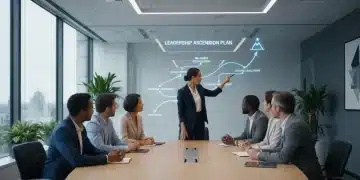
Decoding the Future of Work: 2026 Trends for U.S. Professionals

Anúncios
Understanding the future of work trends for 2026 is crucial for U.S. professionals seeking sustainable career growth, demanding adaptability and continuous skill acquisition to thrive in evolving landscapes.
Anúncios
The landscape of employment is in constant flux, and for U.S. professionals, keeping pace with these changes is not merely advantageous but essential for long-term success. Decoding the Future of Work: 2026 Trends U.S. Professionals Must Understand for Sustainable Career Growth offers a critical roadmap to navigate the evolving job market, ensuring your skills and strategies remain relevant.
The Rise of Hybrid Work Models and Digital Nomadism
Anúncios
The past few years have dramatically reshaped our understanding of where and how work gets done. By 2026, hybrid work models are no longer an exception but a foundational element of organizational design across the United States. This shift demands a new set of competencies from professionals, emphasizing self-management, digital communication, and the ability to thrive in distributed teams.
Digital nomadism, once a niche lifestyle, is also gaining significant traction, with more companies offering flexible arrangements that allow employees to work from anywhere. This trend blurs geographical boundaries and opens up new opportunities for talent, but also presents challenges in maintaining team cohesion and organizational culture.
Adapting to Flexible Work Environments
Successful adaptation to these flexible environments requires a proactive approach to skill development. Professionals must master asynchronous communication tools and develop strategies for effective collaboration across time zones and cultural differences. The ability to set boundaries and maintain productivity independently becomes paramount.
- Mastering virtual collaboration platforms (e.g., Slack, Microsoft Teams, Zoom).
- Developing strong self-discipline and time management skills for remote settings.
- Cultivating digital empathy to foster connection in a virtual environment.
- Understanding and adhering to cybersecurity best practices in remote work.
In conclusion, the prevalence of hybrid work and digital nomadism necessitates a fundamental re-evaluation of traditional work structures. Professionals who embrace flexibility, hone their digital communication skills, and prioritize self-management will be well-positioned to thrive in this decentralized future.
Automation, AI, and the Demand for Human-Centric Skills
Automation and Artificial Intelligence (AI) continue to advance at an unprecedented rate, transforming industries and redefining job roles. While concerns about job displacement persist, the prevailing trend for 2026 suggests a symbiotic relationship between humans and AI. This means a heightened demand for uniquely human-centric skills that AI cannot replicate, such as creativity, critical thinking, and emotional intelligence.
U.S. professionals must understand that AI will augment, rather than entirely replace, many tasks. This frees up human workers to focus on more complex, strategic, and innovative endeavors. The ability to work alongside AI, leveraging its capabilities while contributing human insight, will be a key differentiator.
The Imperative of Upskilling and Reskilling
To remain competitive, continuous upskilling and reskilling in AI literacy and complementary human skills are non-negotiable. This involves not only understanding how AI works but also how to ethically apply it and interpret its outputs. Investing in lifelong learning will be critical for career longevity.
- Developing proficiency in AI tools and data interpretation.
- Enhancing creative problem-solving and innovative thinking.
- Strengthening emotional intelligence and interpersonal communication.
- Cultivating ethical reasoning in the context of emerging technologies.
Ultimately, the integration of automation and AI reshapes the skill sets required for success. Professionals who proactively develop human-centric capabilities alongside technological literacy will secure their relevance in an increasingly automated world.
The Gig Economy’s Expansion and Portfolio Careers
The gig economy, characterized by short-term contracts or freelance work, is poised for significant expansion by 2026, profoundly impacting career paths for U.S. professionals. This shift moves away from traditional, linear career trajectories towards more dynamic ‘portfolio careers,’ where individuals manage multiple projects, clients, and income streams simultaneously. This model offers flexibility and autonomy but also demands greater entrepreneurial spirit and personal brand management.
As companies increasingly rely on external talent for specialized tasks and project-based work, professionals will find more opportunities to leverage their unique skills across diverse engagements. This trend provides a pathway for individuals to diversify their experience and build a robust professional network outside of a single employer.
Navigating the Freelance Landscape
Success in the expanding gig economy hinges on robust self-marketing, financial planning, and continuous skill refinement. Professionals must learn to effectively package their expertise, negotiate contracts, and manage their finances independently. Building a strong online presence and reputation becomes essential for attracting new opportunities.
- Developing strong negotiation and contract management skills.
- Building a compelling personal brand and online professional presence.
- Mastering financial planning and tax implications for independent contractors.
- Networking strategically to secure diverse freelance opportunities.
In essence, the growing gig economy encourages a more entrepreneurial approach to career development. Professionals embracing portfolio careers with strategic planning and continuous self-improvement will find abundant opportunities for growth and fulfillment.
Emphasis on Mental Well-being and Employee Experience
As the demands of the modern workplace intensify, the focus on mental well-being and the overall employee experience will become a critical differentiator for organizations by 2026. U.S. professionals are increasingly prioritizing workplaces that support their mental health, offer work-life balance, and foster an inclusive, supportive culture. Companies that fail to address these concerns risk losing top talent.
This trend extends beyond mere benefits packages; it encompasses a holistic approach to employee welfare, including flexible schedules, access to mental health resources, and a leadership style that promotes psychological safety. Professionals, in turn, are expected to advocate for their well-being and contribute to a positive workplace culture.

Cultivating a Culture of Support
Organizations are investing in initiatives aimed at reducing burnout, fostering resilience, and promoting a healthy work environment. This includes training managers to recognize and address mental health concerns, implementing policies that encourage breaks and disconnectivity, and creating platforms for open dialogue about well-being.
- Prioritizing self-care and setting healthy work-life boundaries.
- Utilizing available mental health resources and employee assistance programs.
- Actively participating in initiatives that promote workplace well-being.
- Developing resilience and stress management techniques.
To conclude, the enhanced focus on mental well-being and employee experience is reshaping workplace expectations. Professionals and organizations alike must prioritize mental health, fostering environments where individuals can thrive both personally and professionally.
Sustainable Practices and Ethical Leadership
The imperative for sustainable business practices and ethical leadership will move from a desirable trait to a fundamental expectation by 2026. U.S. professionals will increasingly seek employment with organizations that demonstrate a genuine commitment to environmental stewardship, social responsibility, and transparent governance. This shift is driven by growing societal awareness and consumer demand for ethical products and services.
Companies are under pressure to integrate sustainability into their core operations, supply chains, and corporate culture. Professionals are expected to contribute to these efforts, whether through specialized roles in sustainability or by embedding ethical considerations into their daily work. Understanding the principles of ESG (Environmental, Social, and Governance) will become increasingly valuable.
Integrating Ethical Frameworks into Work
For professionals, this means developing an understanding of sustainable development goals, corporate social responsibility (CSR) initiatives, and ethical decision-making frameworks. It also involves advocating for and implementing practices that align with these values within their respective roles and industries. Ethical leadership will be crucial for navigating complex social and environmental challenges.
- Understanding ESG principles and their impact on business strategy.
- Advocating for and implementing sustainable practices in the workplace.
- Developing ethical decision-making skills in professional contexts.
- Supporting companies with strong corporate social responsibility programs.
In summary, the demand for sustainable practices and ethical leadership is transforming corporate values. Professionals who embody these principles and contribute to responsible business operations will find themselves aligned with the future direction of the U.S. job market.
Personalized Learning and Skill Stacking
The rapid pace of technological and economic change necessitates a continuous, personalized approach to learning. By 2026, the concept of ‘skill stacking’—acquiring a diverse set of complementary skills that together create a unique professional profile—will be paramount for U.S. professionals seeking sustainable career growth. Traditional degrees alone will often be insufficient; instead, a blend of formal education, micro-credentials, and self-directed learning will define successful career trajectories.
This trend emphasizes the individual’s responsibility for their own professional development, moving away from a one-size-fits-all training model. AI-powered learning platforms will offer tailored educational paths, allowing professionals to acquire in-demand skills efficiently and effectively, often on their own schedule.
Strategies for Continuous Skill Development
Professionals must become adept at identifying skill gaps and proactively seeking out learning opportunities. This involves leveraging online courses, industry certifications, mentorships, and project-based learning to build a versatile and resilient skill set. The ability to learn, unlearn, and relearn will be a core competency.
- Utilizing online learning platforms for micro-credentials and specialized courses.
- Identifying and acquiring complementary skills to create a unique professional stack.
- Engaging in mentorship and peer learning networks.
- Committing to a mindset of continuous learning and adaptability.
Ultimately, personalized learning and skill stacking empower professionals to proactively shape their careers. By continuously acquiring and combining relevant skills, individuals can ensure their adaptability and sustained relevance in a dynamic professional landscape.
| Key Trend | Impact on U.S. Professionals |
|---|---|
| Hybrid Work & Digital Nomadism | Requires strong self-management and digital communication skills. |
| AI & Automation | Increases demand for human-centric skills and AI literacy. |
| Gig Economy Expansion | Fosters portfolio careers, requiring entrepreneurial skills and branding. |
| Personalized Learning | Emphasizes continuous skill stacking and adaptive learning. |
Frequently Asked Questions About the Future of Work
The most critical skills for U.S. professionals by 2026 include digital literacy, adaptability, critical thinking, emotional intelligence, and creativity. Proficiency in AI tools and strong communication skills for hybrid environments are also paramount for sustained career growth.
AI is expected to augment, rather than eliminate, many jobs, enhancing productivity by automating routine tasks. Job security for U.S. professionals will increasingly depend on their ability to collaborate with AI, develop human-centric skills, and continuously upskill to adapt to new roles.
Yes, hybrid and remote work models are firmly established for U.S. professionals. While fully remote might not be universal, flexibility in work location and hours is a growing expectation, requiring strong self-management and digital communication skills from employees.
A portfolio career involves managing multiple projects or income streams simultaneously, often through freelance or contract work. It’s important for 2026 as the gig economy expands, offering flexibility but demanding entrepreneurial skills, personal branding, and diverse professional experiences.
Professionals can prioritize mental well-being by setting clear work-life boundaries, utilizing employer-provided mental health resources, advocating for supportive workplace cultures, and practicing self-care. Organizations are also increasingly expected to foster psychologically safe and inclusive environments.
Conclusion
The future of work in 2026 presents both challenges and unparalleled opportunities for U.S. professionals. By understanding and proactively adapting to trends such as hybrid work, the rise of AI, the expanding gig economy, and the critical importance of well-being and sustainability, individuals can not only safeguard their careers but also foster significant growth. Continuous learning, skill diversification, and a flexible mindset will be the hallmarks of successful professionals navigating this exciting and dynamic landscape.