The 2026 National Debt: $38 Trillion Milestone and Economic Impact
Anúncios
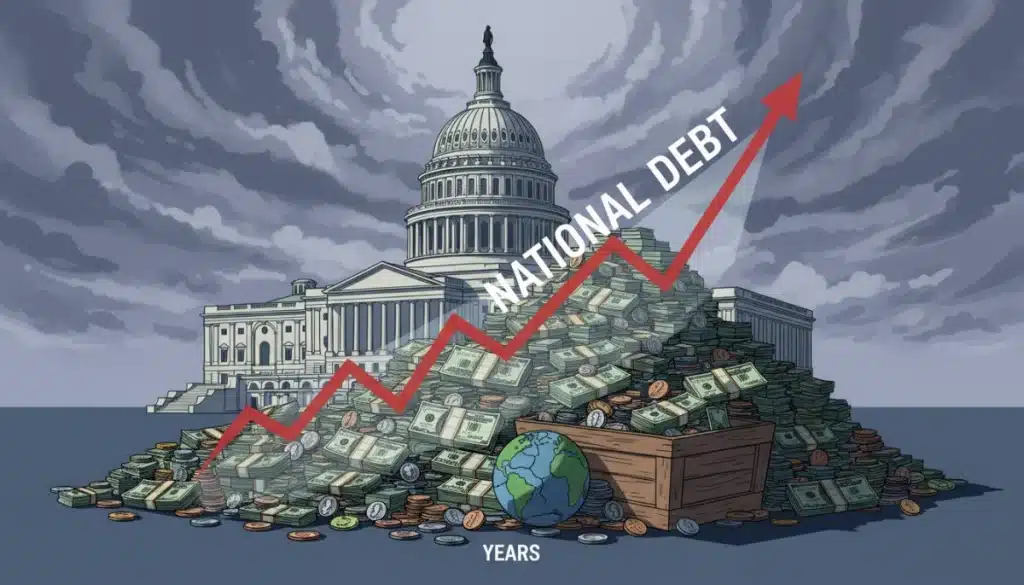
The projected $38 trillion U.S. national debt by 2026 marks a critical juncture, raising concerns about its far-reaching consequences on economic growth, inflationary pressures, and the fiscal health of the nation.
Anúncios
The looming prospect of the U.S. national debt reaching an staggering $38 trillion by 2026 is not just a numerical benchmark; it represents a profound challenge to the nation’s economic future. This monumental figure prompts essential questions about fiscal sustainability, the burden on taxpayers, and the long-term health of the American economy. Understanding the trajectory and implications of this debt is crucial for policymakers, businesses, and every citizen.
Understanding the $38 Trillion Milestone
The U.S. national debt, a cumulative sum of all past government borrowing, has been on an upward trajectory for decades, propelled by various factors including economic downturns, wars, and social programs. The projection to hit $38 trillion by 2026 signifies an accelerating pace of accumulation, demanding a closer look at its components and the forces driving its growth.
Anúncios
This milestone is not merely a statistical anomaly; it reflects a complex interplay of fiscal policies, demographic shifts, and global economic conditions. The sheer scale of this debt raises alarms about the nation’s capacity to manage its financial obligations without jeopardizing future prosperity.
Key Drivers of Debt Growth
Several significant factors contribute to the escalating national debt. These include persistent budget deficits, increased government spending on social security and healthcare, and the cost of servicing existing debt, especially in a rising interest rate environment.
- Persistent Budget Deficits: Year after year, government spending has often exceeded revenues, leading to continuous borrowing.
- Entitlement Programs: The aging population and rising healthcare costs significantly increase expenditures on Social Security and Medicare.
- Interest Payments: As the debt grows, so does the interest required to service it, creating a compounding effect that accelerates debt accumulation.
- Economic Stimulus Packages: Responses to economic crises, such as the 2008 financial crisis and the COVID-19 pandemic, involved massive government spending.
The confluence of these factors creates a powerful momentum that makes slowing down debt growth incredibly challenging. Each dollar added to the national debt today contributes to a larger interest payment tomorrow, creating a cycle that is difficult to break.
In essence, reaching $38 trillion is a stark reminder of the long-term fiscal challenges facing the United States. It underscores the urgent need for comprehensive strategies to address both the revenue side and the expenditure side of the federal budget.
Impact on Economic Growth and Stability
The sheer size of the national debt can have profound implications for economic growth and stability. A high debt-to-GDP ratio can dampen investor confidence, increase borrowing costs, and potentially crowd out private investment, all of which hinder long-term economic expansion.
When the government needs to borrow more, it competes with private businesses for available capital, driving up interest rates. This makes it more expensive for companies to invest, innovate, and create jobs, ultimately slowing down economic growth.
Crowding Out Private Investment
One of the most frequently cited concerns regarding high national debt is the phenomenon of ‘crowding out.’ This occurs when increased government borrowing leads to higher interest rates, making it more expensive for private businesses to borrow money for investment and expansion. Consequently, private sector growth can be stifled.
- Higher Interest Rates: Increased demand for loans by the government can push up interest rates across the economy.
- Reduced Capital for Businesses: Less capital is available for private enterprises, limiting their ability to invest in new projects.
- Slower Innovation: A lack of investment can lead to reduced innovation and technological advancement.
Moreover, a large national debt can make an economy more vulnerable to external shocks. If global investors perceive the U.S. debt as unsustainable, they might demand higher returns, further increasing borrowing costs and potentially leading to a fiscal crisis.
Maintaining a stable and growing economy requires a delicate balance between fiscal responsibility and necessary government expenditures. The $38 trillion debt milestone serves as a critical indicator that this balance is becoming increasingly precarious.
Inflationary Pressures and Monetary Policy
The relationship between national debt, government spending, and inflation is complex but crucial. Large-scale government borrowing, particularly when financed by the central bank, can inject significant amounts of money into the economy, potentially leading to inflationary pressures.
While the Federal Reserve operates independently, its monetary policy decisions are often influenced by the fiscal environment. A high national debt can constrain the Fed’s ability to combat inflation or stimulate growth without exacerbating other economic problems.
Government Spending and Money Supply
When the government spends borrowed money, it increases the aggregate demand for goods and services. If this increase in demand outpaces the economy’s productive capacity, it can lead to higher prices, i.e., inflation. This is particularly true if the borrowing is monetized by the central bank.
- Increased Demand: Government spending boosts overall demand, which can push prices up if supply cannot keep pace.
- Monetary Expansion: If the central bank purchases government debt, it effectively increases the money supply, a classic driver of inflation.
- Loss of Purchasing Power: Inflation erodes the purchasing power of currency, impacting consumers and savers alike.
The challenge for monetary policy in an environment of high national debt is often balancing the need to control inflation with the desire to keep interest rates low to manage debt servicing costs. This creates a difficult tightrope walk for central bankers, with potential consequences for economic stability.
The $38 trillion debt figure therefore presents a significant hurdle for maintaining price stability and ensuring that the monetary policy tools remain effective in achieving their objectives.
The Burden on Future Generations
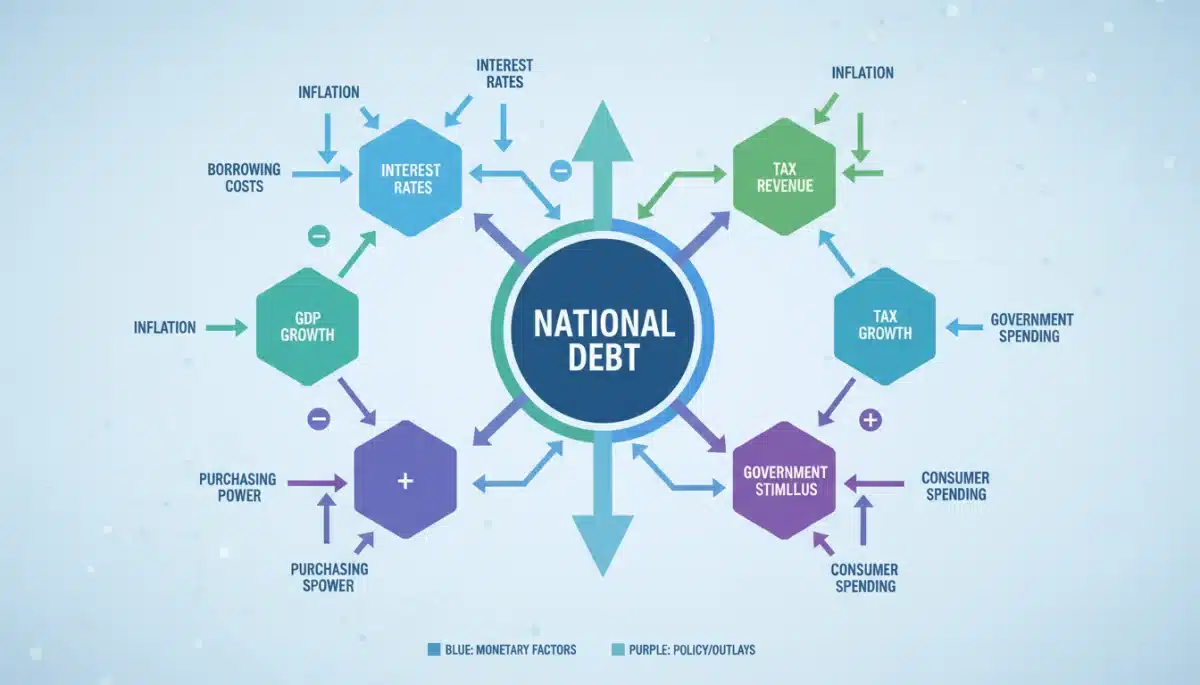

Perhaps one of the most sobering aspects of the burgeoning national debt is the intergenerational burden it imposes. Future generations will inherit not only the accumulated debt but also the responsibility to service it, potentially limiting their economic opportunities and quality of life.
This burden manifests in various ways, from higher taxes and reduced public services to constrained government investment in critical areas like education, infrastructure, and research. The choices made today about fiscal policy will have lasting repercussions for decades to come.
Intergenerational Equity Concerns
The concept of intergenerational equity is central to discussions about national debt. It questions the fairness of current generations benefiting from government spending that is financed by borrowing, leaving future generations to bear the costs.
- Higher Taxes: Future taxpayers will likely face higher tax burdens to fund interest payments and eventually repay the principal.
- Reduced Public Services: Government resources may be diverted from essential services to debt servicing.
- Limited Fiscal Flexibility: Future governments may have less flexibility to respond to crises or invest in growth-enhancing programs.
The long-term economic impact of a $38 trillion national debt means that younger generations might have fewer resources for their own priorities, facing a future where a significant portion of government revenue is consumed by debt obligations. This can stifle innovation, entrepreneurial spirit, and overall economic dynamism.
Addressing this challenge requires a thoughtful and balanced approach that considers the needs of both present and future citizens, aiming for fiscal policies that promote sustainable growth and intergenerational fairness.
Potential Policy Responses and Solutions
Addressing a national debt of $38 trillion by 2026 demands a multi-faceted approach, incorporating both revenue enhancements and expenditure reductions. There is no single, easy solution, and any effective strategy will likely involve difficult political and economic choices.
Policymakers must consider a range of options, from comprehensive tax reforms to re-evaluating entitlement programs and optimizing government spending. The goal is to achieve fiscal sustainability without unduly harming economic growth or social welfare.
Strategies for Debt Reduction
Various strategies can be employed to tackle the national debt. These often involve a combination of increasing government revenue and decreasing government expenditure. Each approach has its proponents and detractors, highlighting the political complexities involved.
- Tax Reform: Adjusting tax rates, closing loopholes, or introducing new taxes could increase government revenue.
- Spending Cuts: Reducing discretionary spending across various government departments or reforming entitlement programs like Social Security and Medicare.
- Economic Growth Initiatives: Policies that foster robust economic growth can increase tax revenues naturally and improve the debt-to-GDP ratio.
- Fiscal Rules: Implementing strict fiscal rules or balanced budget amendments to limit future borrowing.
The effectiveness of these solutions often depends on their political feasibility and public acceptance. A balanced approach that combines modest cuts with responsible revenue generation, coupled with policies that encourage strong economic growth, is often advocated as the most sustainable path.
Ultimately, a concerted effort from both political parties and a willingness to make difficult decisions will be necessary to steer the nation away from an unsustainable debt path.
Global Economic Implications and U.S. Standing
The U.S. national debt doesn’t exist in a vacuum; its size and trajectory have significant implications for the global economy and America’s standing on the international stage. As the world’s largest economy and holder of the primary reserve currency, U.S. fiscal health affects everyone.
A high and growing debt can erode confidence in the dollar, potentially leading to currency instability and shifts in global financial markets. It can also impact the U.S.’s ability to project power and influence internationally.
International Confidence and the Dollar
The U.S. dollar’s status as the world’s reserve currency provides significant advantages, but this status is predicated on confidence in the U.S. economy and its fiscal stability. A rapidly expanding national debt could undermine this confidence.
- Currency Depreciation: Loss of confidence could lead to a weaker dollar, making imports more expensive and potentially fueling inflation.
- Higher Borrowing Costs: International investors might demand higher interest rates for U.S. Treasury bonds, increasing debt servicing costs.
- Shift in Global Power Dynamics: A weakened fiscal position could diminish the U.S.’s influence in global economic and geopolitical affairs.
Other nations closely monitor the U.S. fiscal situation, as it can affect their own economic stability and investment strategies. A perceived lack of fiscal discipline in the U.S. could prompt shifts away from dollar-denominated assets, with far-reaching consequences.
Therefore, managing the national debt is not just a domestic issue; it is a critical component of maintaining global economic stability and preserving the U.S.’s leadership role in the international financial system.
The Role of Technological Advancements and Productivity
While the national debt presents significant challenges, technological advancements and increased productivity could offer avenues to mitigate some of its adverse effects. Innovation has historically been a powerful engine for economic growth, generating new wealth and tax revenues that can help manage debt levels.
Investments in research and development, artificial intelligence, renewable energy, and other cutting-edge fields can boost productivity, leading to higher GDP growth. This, in turn, can improve the debt-to-GDP ratio, making the debt more manageable relative to the size of the economy.
Boosting Economic Output
Technological progress can lead to significant improvements in efficiency and output across various sectors. When businesses adopt new technologies, they can produce more goods and services with the same or fewer resources, driving economic expansion.
- Automation and AI: Streamlining processes and enhancing decision-making, leading to higher productivity.
- Green Technologies: Creating new industries and jobs while addressing environmental challenges.
- Biotechnology and Healthcare: Improving public health and extending lifespans, contributing to a more productive workforce.
Furthermore, a robust and innovative economy attracts foreign investment, which can help finance the debt and stimulate further growth. Policies that foster technological development, such as tax incentives for R&D and investments in STEM education, are crucial in this regard.
However, relying solely on technological advancements to outgrow the debt is not a complete solution. It must be coupled with responsible fiscal policies to ensure that the benefits of growth are effectively utilized to improve the nation’s financial health.
| Key Point | Brief Description |
|---|---|
| $38 Trillion Milestone | Projected U.S. national debt by 2026, highlighting escalating fiscal challenges. |
| Economic Growth Impact | High debt can crowd out private investment and lead to slower GDP expansion. |
| Intergenerational Burden | Future generations may face higher taxes and reduced public services due to current borrowing. |
| Policy Responses | Requires a combination of tax reforms, spending cuts, and growth initiatives. |
Frequently Asked Questions About the National Debt
The U.S. national debt is the total amount of money the federal government owes to its creditors. Its rapid growth is primarily due to persistent budget deficits, increased spending on entitlement programs like Social Security and Medicare, and the costs of servicing existing debt, especially with rising interest rates.
A large national debt can lead to higher interest rates, making borrowing more expensive for consumers and businesses. It can also result in higher taxes, reduced government services, and potentially contribute to inflation, eroding the purchasing power of their money.
While the government can print more money, doing so to pay off debt would likely lead to hyperinflation, severely devaluing the currency and causing economic chaos. This approach is generally avoided due to its catastrophic economic consequences and loss of confidence.
Long-term impacts include slower economic growth due to crowding out private investment, increased inflationary pressures, a heavier tax burden on future generations, and potential erosion of global confidence in the U.S. dollar and its economic stability.
Addressing the debt requires a combination of strategies: increasing government revenue through tax reforms, reducing expenditures via spending cuts or entitlement program adjustments, and implementing policies that foster strong, sustainable economic growth to improve the debt-to-GDP ratio.
Conclusion
The projected rise of the U.S. national debt to $38 trillion by 2026 presents a formidable challenge, demanding serious consideration and proactive solutions. This milestone is more than just a number; it is a critical indicator of the fiscal pressures that could significantly impact economic growth, fuel inflation, and place an undue burden on future generations. While the path to fiscal sustainability is complex and fraught with difficult choices, a concerted effort combining responsible fiscal policies, strategic investments in growth-enhancing technologies, and a commitment to intergenerational equity is essential. The future prosperity of the United States hinges on its ability to navigate these financial waters with foresight and determination, ensuring a stable and robust economic environment for decades to come.